
Are There Real Benefits of Professional Cat Grooming?
Last Updated: November 8, 2026
Quick Summary
Professional cat grooming can help maintain coat condition, remove loose hair, manage tangles, and support routine hygiene. Depending on the individual cat's needs, services may include brushing, combing, nail trimming, and bathing when appropriate. Groomers may also notice changes in the skin or coat that warrant veterinary attention. While many cats groom themselves effectively, others benefit from additional assistance because of their coat type, age, mobility, or health.
• Individual grooming needs: Cats may need additional grooming assistance depending on their coat type, age, mobility, and health.
• Coat maintenance: Regular brushing and combing can help remove loose hair and reduce tangles.
• Grooming frequency: There is no single schedule that works for every cat. Grooming needs vary by individual.
• Long-haired cats: Cats with longer or denser coats may require more frequent brushing, especially in areas prone to matting.
• Professional care: Choose a groomer experienced with cats who prioritizes gentle handling, safety, and communication with pet parents.
Table of Contents
Why Professional Cat Grooming Helps Cats Look and Feel Better
Although cats naturally groom themselves, some benefit from additional coat care. Long-haired cats and those with limited mobility may have difficulty maintaining certain areas of their coats. Professional grooming can help remove loose hair, manage tangles, maintain nail length, and support routine hygiene. Groomers may also notice changes in the skin or coat that should be evaluated by a veterinarian.
At Heights Grooming, we believe professional cat grooming is an important part of routine coat care and hygiene. Our approach emphasizes gentle handling, pet safety, and individualized attention to each cat's needs.
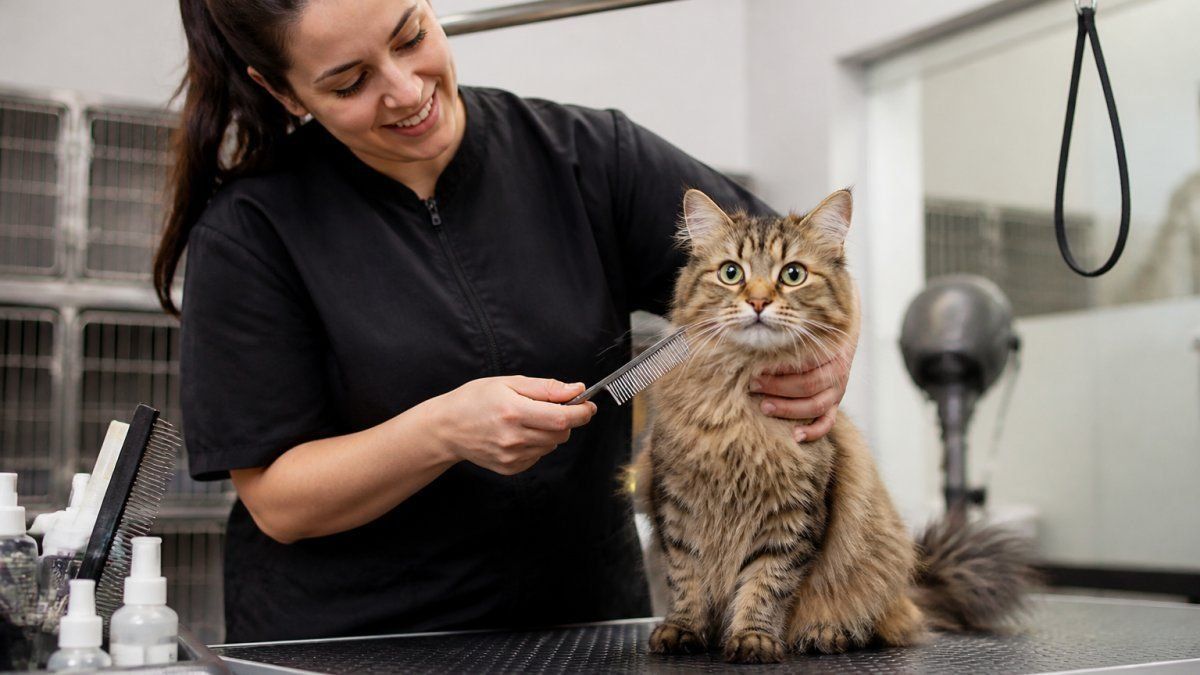
The American Society for the Prevention of Cruelty to Animals notes that cats are fastidious self-groomers, but ASPCA guidance on cat grooming also points out that older, overweight, or long-haired cats often need help with coats they cannot reach.
How Often Do Cats Need Professional Grooming?
There is no single schedule that fits every cat; frequency depends on coat length, breed, age, health, activity level, and shedding. If you are weighing a standing appointment, read our closer look at whether safe cat grooming is worth it.
Regular brushing at home can help remove loose hair and reduce tangles between professional grooming appointments. The appropriate frequency depends on your cat's coat type, length, and individual needs. Introduce brushing gently and avoid pulling on tight mats. If matting is difficult to remove or your cat shows signs of pain or distress, consult a professional groomer or veterinarian.
Professional Cat Grooming for Long-Haired Cats
Long-haired cats, including Persians, Maine Coons, and Ragdolls, may need additional help maintaining their coats. Loose hair and tangles can accumulate in areas such as behind the ears, under the legs, and around the hindquarters. Regular brushing and combing can help manage these areas, although grooming needs vary depending on each cat's coat condition and ability to groom itself.
Bathing may be appropriate for some long-haired cats, but not every cat needs a bath during grooming. A professional groomer can assess the coat and determine which services are suitable. Tight or extensive matting should not be pulled apart forcefully, as this can cause pain or skin irritation. Depending on the severity of the matting, carefully clipping the affected coat may be a safer option. Grooming recommendations should be discussed with the pet parent before proceeding.
Review our cat grooming services in the Heights, grooming services, and packages and pricing, then request an appointment.
Cat Grooming for Shedding and Matted Fur
Shedding is a normal process for cats, although the amount varies by individual cat, coat type, and season. Regular brushing and appropriate professional grooming can help remove loose hair and maintain coat condition. Brushing may also reduce the amount of loose hair a cat swallows during self-grooming, but it does not guarantee fewer hairballs. Frequent vomiting or hairballs should be discussed with a veterinarian, as they may indicate an underlying health concern.
Matted fur can pull on a cat's skin and cause discomfort. Regular coat maintenance may help reduce tangling, but tight or extensive mats should be assessed by a professional. Avoid pulling, cutting, or attempting to remove severe mats at home, as this can injure your cat.
What to Look for in a Cat Groomer
Not every dog groomer handles cats. Ask direct questions before you book:
- Does the groomer work with cats regularly, not just dogs?
- How are anxious or senior cats handled during the appointment?
- Are prices published, and are extra charges discussed before work begins?
- Can the groomer explain how they handle matting without defaulting to a shave?
- Will they refer skin, ear, or health concerns to a veterinarian rather than treat them?
A professional cat groomer should be willing to discuss their experience, handling practices, grooming recommendations, and pricing. Clear communication helps pet parents make informed decisions about their cat's care. At Heights Grooming, we prioritize safety, compassionate handling, and transparency throughout the grooming process.
Professional grooming can be a valuable part of maintaining your cat's coat, nails, and overall hygiene. At Heights Grooming, we provide individualized cat grooming services with an emphasis on safety, compassionate handling, and clear communication with pet parents. Whether your cat needs routine coat maintenance, nail trimming, or help managing tangles, our team is here to help.
Frequently Asked Questions
Do cats really need professional grooming?
Many cats maintain their coats through self-grooming and regular brushing at home. However, cats with long or dense coats, limited mobility, or difficulty grooming themselves may benefit from professional assistance. Professional grooming can help remove loose hair, manage tangles, and maintain nail length. A groomer may also notice skin or coat changes that should be discussed with a veterinarian.
How often should I professionally groom my cat?
There is no universal grooming schedule for cats. The appropriate frequency depends on coat length, texture, age, health, and the cat's ability to groom itself. Some cats need only occasional professional assistance, while others benefit from more frequent coat maintenance. At Heights Grooming, we can assess your cat's coat and recommend a grooming routine based on its individual needs.
What should I expect during a professional cat grooming appointment?
A professional cat grooming appointment typically begins with an assessment of the cat's coat condition and grooming needs. Services may include brushing, combing, nail trimming, ear cleaning, and bathing when appropriate. The groomer should consider the cat's temperament and comfort throughout the appointment. If unusual skin, coat, or ear concerns are observed, the groomer may recommend veterinary evaluation. Grooming services do not replace veterinary care.

Share On: