
Best Grooming Techniques for Doodles in 2026
Last Updated: November 1, 2026
Quick Summary
The best grooming techniques for Doodles depend on each dog's individual coat type, texture, and condition. Regular brushing, appropriate grooming tools, and thorough drying after bathing can help reduce tangles and matting. At Heights Grooming, we assess each dog's coat to recommend a grooming routine suited to their individual needs.
• Match grooming tools to the coat: Choose brushes and combs appropriate for your Doodle's coat texture and condition.
• Check for tangles: Gently use a metal comb to identify areas that need additional brushing.
• Establish a grooming routine: Brushing frequency and professional grooming intervals depend on the individual dog's coat.
• Prepare before bathing: Check for tangles and matting before getting the coat wet.
• Dry thoroughly: Proper drying after bathing helps maintain coat condition and reduce tangling.
Table of Contents
Doodle Grooming Tools That Match the Coat
Doodle grooming starts with one honest admission: there is no single Doodle coat, so the right techniques change with every dog. At Heights Grooming, the tool choice is tailored to each dog's coat.
Doodle coats can be curly, wavy, straight, or a combination of textures. Coat density, length, and shedding patterns vary between individual dogs, and any coat type can develop tangles or matting. A slicker brush may help remove loose hair and gently work through minor tangles, while a metal comb can help identify areas that need additional attention. Always brush carefully without pulling on the skin and seek professional assistance for tight or extensive matting.
For additional guidance on brushing, bathing, and routine coat care, visit the American Kennel Club's guide to dog grooming.
If your dog is a Doodle or Poodle mix with a dense, unpredictable coat, Heights Grooming can assess the coat during an appointment.
How Often Should You Groom Your Doodle?
A Doodle's grooming needs depend on coat texture, length, density, activity level, and how easily tangles develop.
• Curly coats: May require frequent brushing and combing to prevent tangles from developing close to the skin.
• Wavy coats: Benefit from regular brushing, particularly around the ears, legs, and areas where friction occurs.
• Straighter coats: May shed more visibly but still require brushing and routine coat maintenance.
There is no single grooming schedule that works for every Doodle. Your professional groomer can help determine an appropriate home-care routine and appointment frequency based on your dog's individual coat.
For more information about maintaining your Doodle's coat, read our article, Coat Care Is Essential: Top Three Myths About Your Doodle.
How to Bathe a Goldendoodle Without Matting the Coat
Bathing a Goldendoodle requires attention to coat condition before, during, and after the bath. Check the coat for tangles and matting before getting it wet, as washing and drying an already tangled coat can make knots more difficult to manage. Use a dog-appropriate shampoo according to the manufacturer's instructions, rinse thoroughly, and dry the coat carefully. If your dog has tight or extensive matting, consult a professional groomer before attempting to bathe or remove the mats at home.
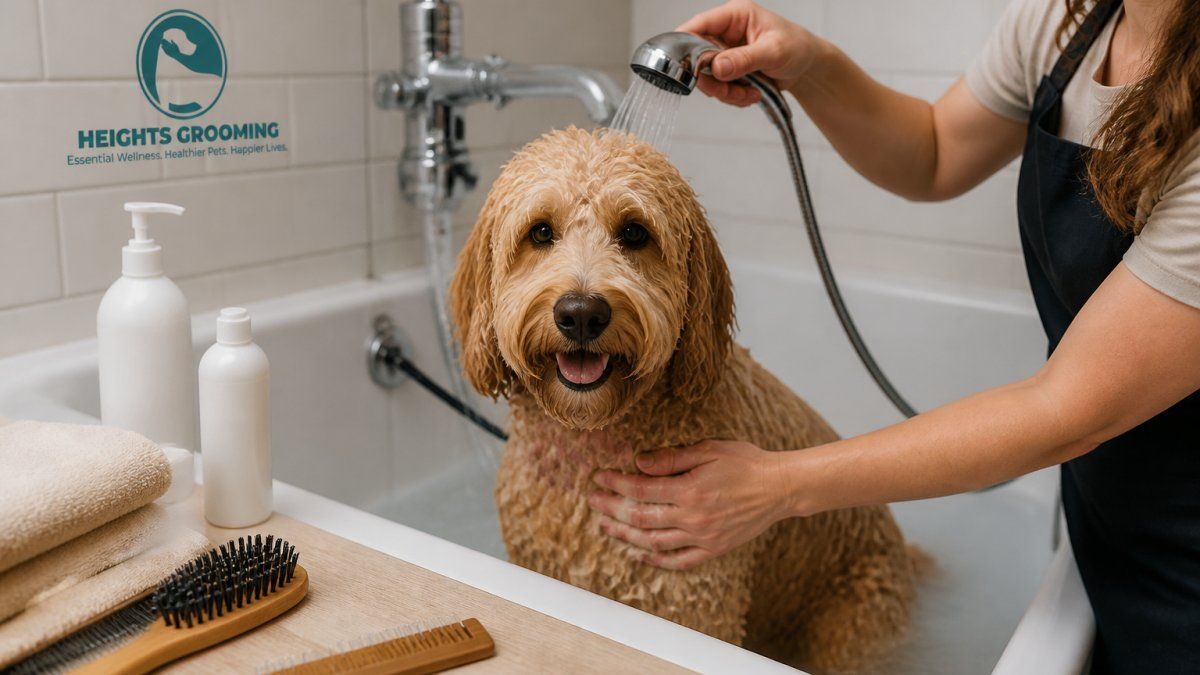
1. Check the coat first. Gently brush and comb the coat to identify tangles. Have tight or extensive matting assessed by a professional groomer.
2. Choose an appropriate shampoo. Use a shampoo formulated for dogs and follow the manufacturer's instructions for application and dilution.
3. Wet the coat carefully. Use comfortably warm water, avoiding the eyes, ears, and nose.
4. Apply shampoo gently. Work through the coat without excessive rubbing or pulling.
5. Rinse thoroughly. Remove shampoo residue from the coat and skin.
6. Towel dry gently. Blot or squeeze excess moisture rather than vigorously rubbing the coat.
7. Dry the coat carefully . Use a pet-safe drying method and avoid excessive heat. Pay attention to areas where moisture may remain trapped beneath dense hair.
Thorough drying is an important part of maintaining a Doodle's coat. Moisture trapped beneath dense hair can contribute to tangling and skin discomfort. If you're unable to safely bathe, brush, or dry your dog's coat at home, a professional groomer can help assess its condition and recommend appropriate care. At Heights Grooming, we're happy to help you develop a grooming routine suited to your dog's individual needs.
Heights Grooming offers individualized dog and cat grooming with compassionate handling, transparent pricing published on our website, and any additional charges discussed and approved before we proceed. Get started with Heights Grooming and build a coat-care routine that fits your dog.
Frequently Asked Questions
How often should a Doodle be professionally groomed?
The ideal grooming frequency depends on your Doodle's coat texture, length, density, activity level, and home brushing routine. Dogs with longer or easily tangled coats may need more frequent professional grooming. At Heights Grooming, we assess each dog's coat and recommend an individualized grooming schedule to help maintain coat condition and comfort.
What should you do if a Doodle's coat is severely matted?
Severe matting should be evaluated by a professional groomer. Attempting to pull apart tight mats can cause pain and skin irritation, while cutting them with scissors can accidentally injure the skin. Depending on the severity of the matting, a shorter haircut may be the safest and most comfortable option. At Heights Grooming, we assess coat condition and discuss recommended grooming options with pet parents before proceeding.
How can you tell if a Doodle is uncomfortable during grooming?
Dogs may show discomfort during grooming through trembling, pulling away, freezing, a tucked tail, repeated lip licking, or yawning. These behaviors should be considered alongside the dog's overall body language and circumstances. If your Doodle appears fearful or uncomfortable, pause the grooming activity and allow time to relax. Persistent anxiety or signs of pain should be discussed with a veterinarian. At Heights Grooming, we prioritize gentle handling, pet safety, and communication with pet parents.

Share On: