
How to Handle Matted Dog Fur: A Safe Step-by-Step Guide
Table of Contents
- How to Handle Matted Dog Fur: Start With a Coat Assessment
- What You'll Need Before You Start
- Step-by-Step: Working Through Tangles Safely at Home
- When Matted Fur Requires Professional Attention
- How to Prevent Matting in Dogs: A Maintenance Routine That Works
- Keeping Your Dog Comfortable and Mat-Free
- Frequently Asked Questions
Last Updated: October 8, 2026
How to Handle Matted Dog Fur: Start With a Coat Assessment
Knowing how to handle matted dog fur starts with one question: is this a tangle or a true mat?
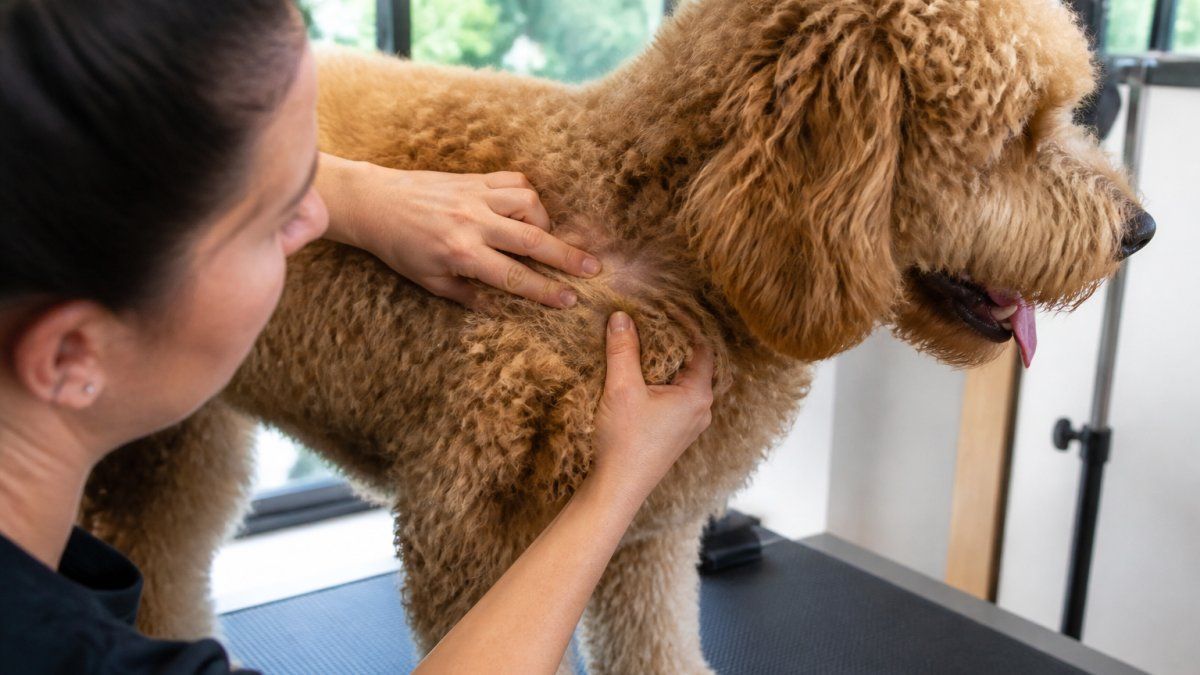
Matted fur can cause discomfort and make routine grooming difficult. The first step is determining whether your dog has a loose tangle or a tight mat. Minor tangles may respond to gentle brushing, while dense mats close to the skin often require professional attention. Recognizing the difference can help protect your dog's comfort and prevent injury.
Tangles vs. Mats: How to Tell the Difference
A tangle is a loose knot in the coat that may separate with gentle brushing or combing. A mat is a denser collection of tangled hair that can become tightly attached near the skin.
Gently examine your dog's coat, especially behind the ears, under the collar, around the armpits, and near the tail. If the hair feels tightly packed, resists gentle brushing, or causes discomfort when touched, stop and consult a professional groomer.
Why Mats Hurt and Why Ripping Them Out Is Never an Option
Matted fur can pull on a dog's skin during normal movement, causing discomfort and irritation. Tight mats may also conceal skin problems that are difficult to see beneath the coat.
Trying to pull or forcefully brush out a mat can cause pain or injury. If a mat cannot be loosened gently, professional grooming is the safer option.
What You'll Need Before You Start
Gather your tools before you touch the dog. A nervous dog will not wait while you search for a comb.
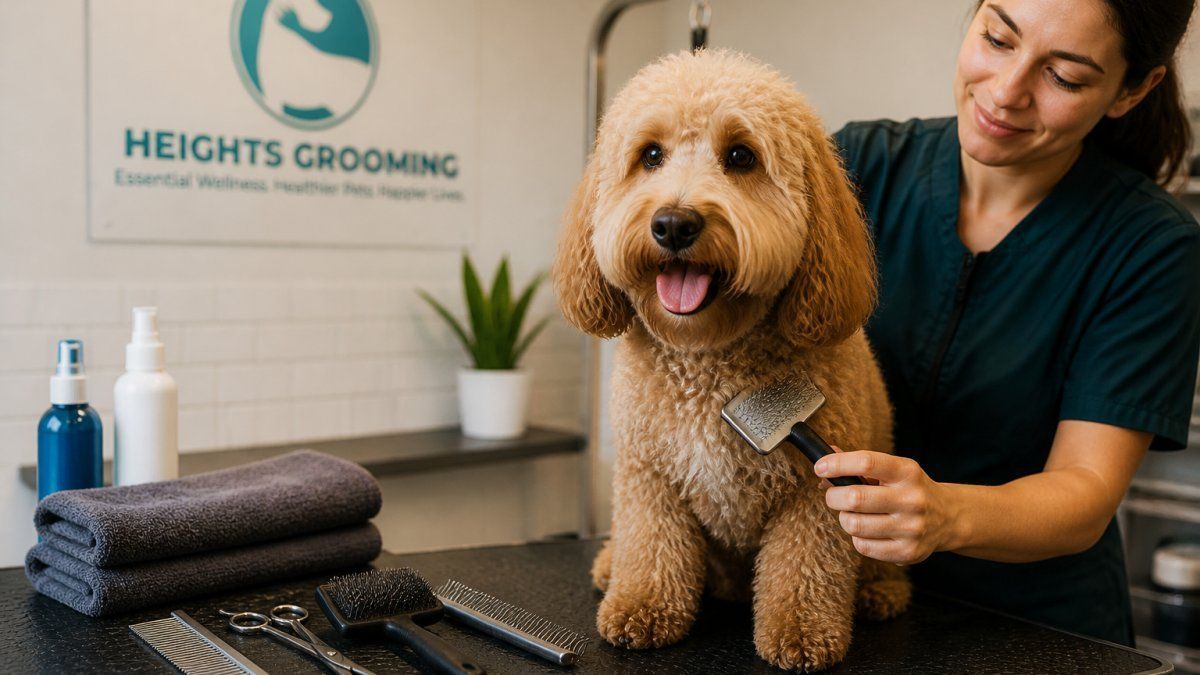
You will need:
- A metal comb with wide and fine teeth
- A slicker brush for loose hair
- Detangling spray or a little pet-safe conditioner
Skip human hair products. Work in a well-lit spot on a stable surface. Take breaks every few minutes. If your dog pulls away, stop and reset.
Step-by-Step: Working Through Tangles Safely at Home
Minor, loose tangles may sometimes be managed at home with gentle brushing and combing. Never force a brush or comb through tightly matted fur.
1. Keep your dog comfortable. Choose a quiet area with a secure, non-slip surface.
2. Check the coat. Identify loose tangles and avoid areas where hair is tightly matted against the skin.
3. Work gently. Use a coat-appropriate brush or comb, taking care not to pull on the skin.
4. Watch for discomfort. Stop if your dog pulls away, stiffens, yelps, or shows other signs of distress.
5. Know when to seek help. If a tangle cannot be removed easily or the skin appears irritated, consult a professional groomer or veterinarian.
Common Mistakes That Make Matting Worse
• Brushing only the surface: Tangles can develop beneath the outer coat, especially in dense or curly coats.
• Pulling through tight mats: Forcing a brush or comb through matted hair can cause pain and skin irritation.
• Using scissors near the skin: Cutting mats with scissors can accidentally injure the skin hidden beneath the hair.
• Bathing without checking the coat: Washing and drying an already tangled coat can make knots more difficult to manage.
Before bathing, gently check your dog's coat for tangles or matting. If you discover tight or extensive mats, consult a professional groomer before attempting to remove them or bathe your dog at home.
When Matted Fur Requires Professional Attention
Severe matting can pull on a dog's skin, cause discomfort, and conceal irritation or other skin problems. Attempting to brush out tight mats may be painful and can injure the skin.
Contact a professional groomer if:
• Mats are tightly attached near the skin.
• Large areas of the coat are tangled together.
• Your dog shows pain or distress when touched.
• Gentle brushing does not loosen the tangles.
A professional groomer can assess the coat and determine whether careful detangling or clipping is appropriate. In some cases, a shorter haircut is the safest and most comfortable option.
Important: If you notice open sores, swelling, discharge, an unusual odor, or significant skin irritation, consult your veterinarian. Medical concerns should be evaluated before routine grooming continues.
How to Prevent Matting in Dogs: A Maintenance Routine That Works
Preventing matting starts with a grooming routine suited to your dog's coat type, length, and lifestyle. Dogs with longer, curly, or dense coats generally need more frequent brushing than dogs with short, smooth coats.
Here are a few helpful habits:
• Brush and comb regularly. Use tools appropriate for your dog's coat and gently check for tangles beneath the surface.
• Pay attention to problem areas. Check behind the ears, under the collar, around the legs and armpits, and near the tail.
• Check after outdoor activities. Swimming, rain, and outdoor play can contribute to tangling, particularly in longer coats.
• Schedule professional grooming. Your groomer can recommend an appropriate schedule based on your dog's individual coat and grooming needs.
At Heights Grooming, we help pet owners develop practical coat-maintenance routines, including guidance for Doodles and other breeds prone to matting.
Keeping Your Dog Comfortable and Mat-Free
Regular coat maintenance can help prevent painful matting, but even attentive pet owners may encounter tangles that require professional care. The important thing is to recognize problems early and avoid pulling or cutting tightly matted fur at home.
At Heights Grooming in Houston Heights, we provide individualized grooming services for dogs of different breeds, sizes, and coat types, including Doodles. Our team can evaluate your dog's coat, discuss appropriate grooming options, and help you establish a maintenance routine.
Ready to schedule your dog's next grooming appointment? Request an appointment with Heights Grooming: https://www.heightsgrooming.com/request-appointment-form
Frequently Asked Questions
Can matted dog fur be saved, or does it always need to be shaved?
Not all matted fur needs to be shaved. Small, loose tangles may be removed with gentle brushing or combing, depending on the dog's coat and comfort level. However, tight mats close to the skin or extensive matting may require a shorter haircut to avoid painful pulling. A professional groomer can assess the coat and recommend the safest, most comfortable option for your dog.
Is matted fur considered neglect?
Matted fur does not automatically mean a dog has been neglected. Matting can develop because of coat type, friction, moisture, changes in grooming routines, or difficulty maintaining a dog's coat. However, severe or prolonged matting can cause discomfort and skin problems. The important thing is to address matting promptly and work with a professional groomer to establish an appropriate maintenance routine.
Should I brush my dog before or after a bath?
It's generally best to check your dog's coat and gently remove loose tangles before bathing. Washing and drying a tangled coat can make existing knots more difficult to manage. After bathing and thoroughly drying your dog, brush or comb as appropriate for their coat type. If you discover tight or extensive matting, consult a professional groomer before bathing or attempting to remove it yourself.
Can I cut mats out with scissors at home?
Cutting matted fur with scissors at home is not recommended. A dog's skin can become hidden or pulled into a mat, increasing the risk of accidental cuts, even with blunt-tipped scissors. Small, loose tangles may be managed with gentle brushing, but tight mats should be evaluated by a professional groomer. If the skin appears injured or infected, consult your veterinarian.

Share On: